If you experience a problem donating via our website, please accept functional cookies in your browser or call us on 0303 303 3030
Statement by Bishop John Arnold made at the event 'Shared Responsibility, Shared Future: Faith and Climate Leadership in Action' on 25 June.
I am very grateful for this opportunity to address this meeting, and only sorry that because of travel disruption I cannot be with you in person.
Pope Francis certainly brought the whole subject of the environment, climate change, and our duty as stewards and guardians to care for our common home, to a world stage. His encyclical letter, Laudato Si, published just over 10 years ago, was addressed to all people of goodwill and it is the most published encyclical in history – there is also a copy of it in the UNFCCC exhibition in Bonn alongside the Paris Agreement. He certainly brought attention to so many people around the world of the damage we have done to the environment. It was a real catalyst for action amongst the Catholic community and beyond. It inspired me to establish a Laudato Si Centre in Salford with a programme across Catholic schools and parishes in my diocese. Pope Francis was very clear in stating that "each and every one of us has our part to play". I certainly see this sense of responsibility in growing numbers, both here in the United Kingdom and around the world. There is certainly a growing understanding that our personal habits and choices do make a difference and I see this in our schools and parishes.
In 2015, the Paris Agreement was also signed which engaged so many nations in a common vision of the urgency of the situation and provided a roadmap for effective action. In many ways that year was a high watermark for multi-lateral cooperation, with the Paris Agreement and Sustainable Development Goals. I hope that the action agenda and forthcoming global stocktake can serve to renew and strengthen our climate ambition. There was a clear acceptance of the ever-increasing scientific understanding that we are fast approaching a point when the environment would suffer irreparable damage. Successive COP meetings have all made some positive decisions but, in every case, the decisions have either not been drastic enough or have not been followed by sufficient action. Even today, in the face of some very challenging geopolitical headwinds, I believe that the message of Laudato Si resonates as strongly today as before.
The real change which is required must come through the actions of both industry and politics. This is where real and urgent change can take place. It is where whole economies can be re-shaped. The repair of the damage done to our environment is a long-term policy which requires a determined view which is not often found in politics. To get beyond the electoral cycles we need cross party consensus on this important issue. As Pope Francis says, “True statecraft is manifest when, in difficult times, we uphold high principles and think of the long-term common good” (Laudato Si, 178), which he follows up by saying, “To the powerful, I can only repeat this question: 'What would induce anyone, at this stage, to hold on to power, only to be remembered for their inability to take action when it was urgent and necessary to do so?'” (Laudato Deum, 60).
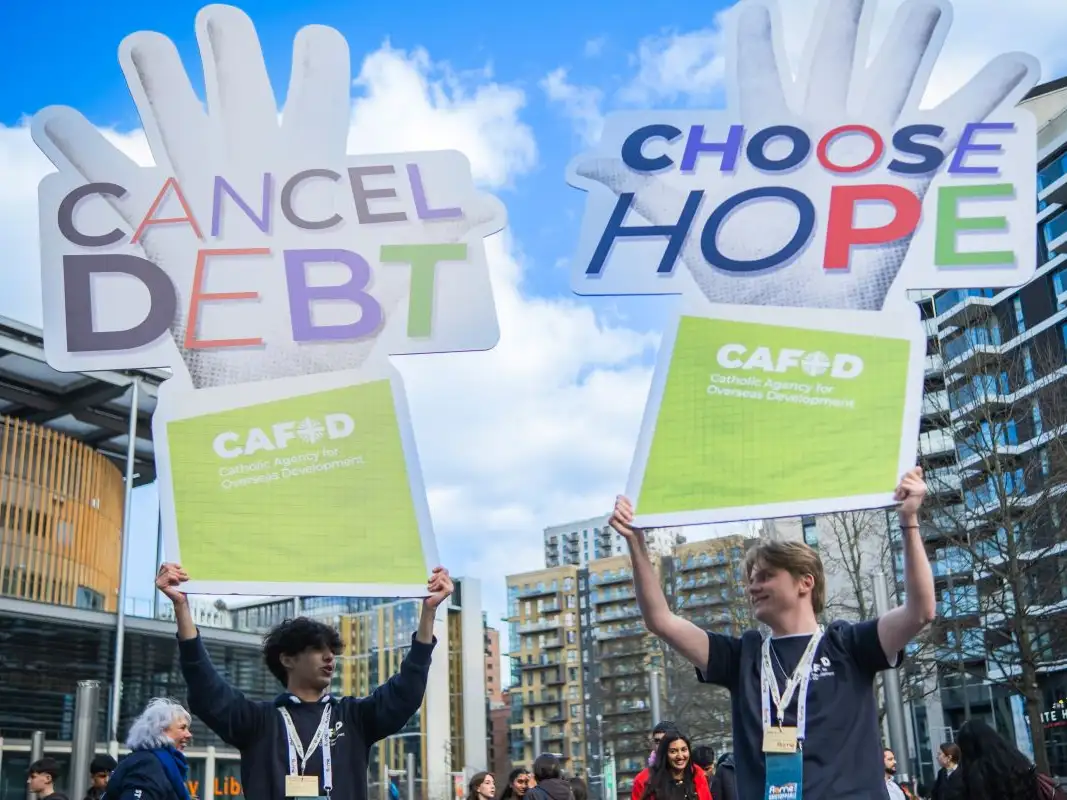
Industry takes time to adjust but it must be in our industrial procedures where real progress can be made. The reliance on fossil fuels presents a danger to our long-term existence. The transference to renewable energy, wind and solar power is essential, as is looking after the workers who are presently engaged in the fossil fuel industry. If we persist in pursuing short-term policies and industry driven by short-term profits we will not be focusing on the long-term essential vision of a healthy environment, which will serve for the security and dignity of our brothers and sisters around the world and for future generations. Those who have caused this problem through our own industrialisation have a particular responsibility in developing a sustainable future and in assisting other nations, mainly in the global south, to mend the loss and damage which has been inflicted upon them. One direct result of the environmental damage in the global south is the mass migration of people who cannot provide for themselves because of the impact of climate change. Millions of people will be needing to move in order to survive. As climate impacts mount, those communities desperately need money, with public grants being cut we must address the debt crisis with 93% of the countries most vulnerable to the climate crisis either in debt distress or at significant risk of it.
It is estimated that 85% of the world’s population belong to one of the world faiths. In my experience, all the world faiths have an understanding of the importance of a care for the environment. Working together, these billions of people can be encouraged to make a practical impact. But the pathway through industrial methods and the direction of politics must provide the means to make the necessary impact.
For more information or interview requests, please contact:
Rosalind Mayfield, CAFOD Media Lead
Melissa Nethersole, CAFOD Media Officer
CAFOD’s out-of-hours media line
CAFOD is the official aid agency of the Catholic Church in England and Wales, and part of Caritas Internationalis, working with communities across Africa, Asia, the Middle East and Latin America to fight poverty and injustice, including those worst hit by climate change. The agency works with people in need, regardless of race, gender, religion or nationality.
CAFOD is funded mainly by voluntary donations from people in the Catholic community of England and Wales. We also receive funding from fellow Catholic charities and development agencies, the DEC, trusts and foundations, and the UK and other governments.