Lebanon was thrown into war on 2 March after rockets were launched from Lebanon by Hezbollah towards Israel, responding to the assassination of Iran’s supreme leader. As a result, Israel retaliated with airstrikes in various regions in Lebanon.
Three months on, civilians face the worst of the conflict. One-in-five people have been forced to flee from home, leaving behind their lives, neighbourhoods and work.
In spite of the 16 April ceasefire, violence and displacement continue. Over 33,000 families remain displaced.
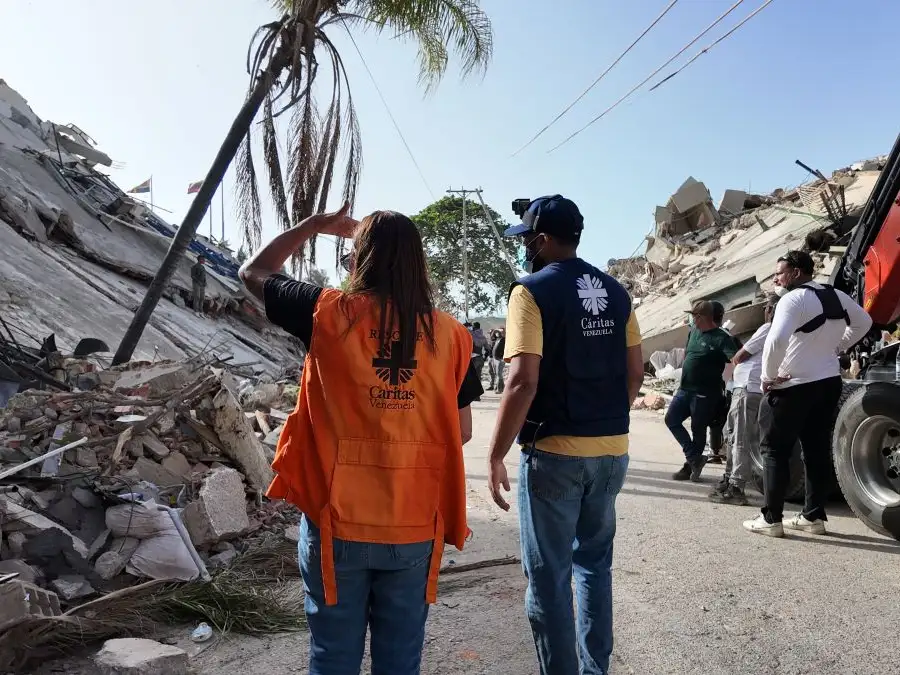
Many of those who fled the bombs have tried to return home. But home is no longer safe. Roads they once took to work are bombed, schools are now shelters and homes are unliveable. Others are not able to return to their villages that are not accessible or unsafe.
But worst of all, many have lost loved ones. Over 3,000 people have been killed in three months – that’s 1,000 people killed a month.
The ceasefire in Lebanon is a ceasefire in name only. Our sisters and brothers living in the south of Lebanon live a different reality.
Towns and villages are still being attacked, others are being destroyed entirely. Since the ceasefire was called in April, over 600 people have been killed.
Children’s futures remain uncertain. Schools have been turned into shelters, housing thousands of people. Where students once studied, families now shelter in hope to one day safely return home.
Pope Leo continues to call for peace and raise his concerns over the use of modern warfare on civilians. Referring to recent conflicts, including in Lebanon, the Pope noted that today "war is being waged with AI, without thinking about human lives, which are truly victims of all this".